


Although the vast majority of our knives are made of stainless steel, Mikov also offers the Commandosknife and one type of UTON knife made of carbon steel. Each type of steel has its own specific properties and advantages, which are, however, offset by certain disadvantages.
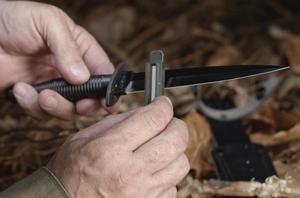
Steel is essentially an alloy of iron and carbon. The fundamental difference between steels lies in their carbon content and the presence of other elements, primarily chromium. The more carbon a steel contains, the harder and stronger it is; it can be easily sharpened to a very sharp edge and retains its sharpness for a long time, but at the same time, it has a lower resistance to corrosion. Stainless steel therefore contains a significant proportion of chromium, and other elements—such as nickel, molybdenum, or manganese—may also be added to further improve its properties. However, the steel does not hold an edge as well or is much more difficult to sharpen. Sharpening a knife made of high-quality, high-hardness steel on your own at home is very difficult, so it’s necessary to have it sharpened by a specialist.
To meet the widest possible range of customer needs, Mikov uses various types of steel for its knives. The Predatorknives offer the widest range of options . Mikov manufactures these from Damascus steel, RWL, N690 steel, and standard 420 stainless steel. But the range of steels used is much broader. For example, the exclusive Ruby kitchen knives and butcher’s knives are made of DIN 1.4116 stainless steel, whilehunting knives are made of 440 steel. You can always find the specific material of each knife on our website in the product description under the “Parameters” tab.
Although stainless steel is clearly the most popular choice for knives, many customers still prefer, for example, the UTONmilitary knife made of carbon steelfrom Mikov’s lineup . While its excellent edge comes at the cost of requiring more thorough maintenance and storing the knife in a clean, dry place, it’s still a great choice.