



We take them for granted, as if they’ve always been here. When we were born, everyone around us was already using them. Yet the first one didn’t appear until the early 19th century, and the second at the end of that century. We’re talking about can openers and bottle openers—now completely commonplace parts of our lives, as well as a whole range of knives from Mikov.
British merchant Peter Durand obtained a patent for a tin can made of tin-plated steel in 1810. He thus solved the problem of food storage, which had a major impact especially on the military and travel, but the problem of opening them remained. A hammer or chisel were certainly not safe or practical tools.
However, it took nearly another 50 years before the first patent for a can opener was granted. It was awarded in 1858 in the U.S. to Ezra Warner. It wasn’t yet the simple tool that Mikov uses on its Stovka, Praktik, or Fixirknives , but the path toward it had been paved.
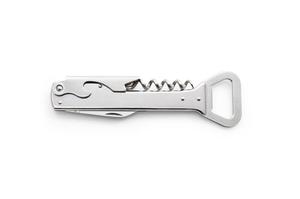
The bottle opener for crown caps, which Mikov manufactures in its classic form on the Handy waiter’s knife, is even more recent. Throughout most of the 19th century, bottles were sealed in various ways, including with corks and porcelain caps secured with wire. These methods were unreliable; the beer or soda in the bottle was often contaminated, or the carbon dioxide would escape. The safe and reliable system for filling, sealing, and opening bottles—which we still use today—was patented by American inventor William Painter as late as 1892.
Painter’s bottle-capping system spread throughout the world. Its popularity is illustrated, for example , by the hilt ofthe Repetitorknife , which is shaped like a crown cap. The reason is clear—the Repetitor knife’s shape is reminiscent of the bayonet used by conscripts during the era of mandatory two-year military service. And soldiers loved beer.