



Damascus steel is also colloquially known as “Damascus.” It is named after the capital city of Syria, through which it used to be imported from India. Today, this term refers to a material composed of multiple types of steel that are layered and forged together. However, in the past, it was something a little different
Historical Damascus steel was used primarily for battle swords. It was so strong that such a weapon could cut through enemy armor, and at the same time, the sword could be bent from the tip to the hilt without breaking.
The production of historical Damascus steel was very expensive—and, above all, a closely guarded secret. The old masters passed its secrets down from generation to generation and often took them to their graves. As a result, very few people today know how this steel was produced.
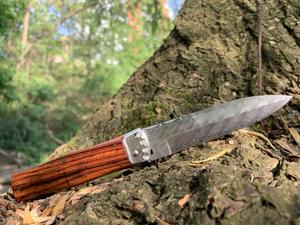
Its place has therefore been taken by what is generally considered Damascus steel today—a material created by repeatedly forging, interlaying, and reforging strips of steel with different properties. Etching these layers later creates a distinctive pattern, which master craftsmen can develop into extraordinary beauty. However, it is primarily the combination of hard and brittle steel with soft and more malleable steel that gives rise to a material with unique properties.
Some blacksmiths create Damascus steel themselves, but it can also be purchased from manufacturers. Mikov uses Damascus steel for its luxury knife editions. Of course, this includes the Predator switchblades—particularly the Jaguar model—but it can also be found in the blades of the luxury versions of the classic Rybička knives.