



Even the highest-quality knife—whether it’s a butcher’s knife, a kitchen knife, a hunting knife, or even a military-grade knife—will become dull with use. Paradoxically, for many of us, it’s not frequent cutting that wears down our knives, but rather improper storage.
And let’s set aside for now the frequent washing of knives in the dishwasher, where harsh detergents damage the delicate structure of the steel. It is precisely the careless tossing of a knife into a kitchen drawer among the cutlery that causes nicks to form on a beautifully sharpened blade; the knife then cuts very poorly and must be sharpened over and over again.
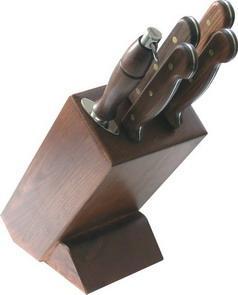
So how should you properly store kitchen knives? There are several methods. One very effective method is to use a wooden knife block with slots for the knives, into which you always insert the cleaned knives after use. You can place the block on the kitchen countertop so your knives are always within easy reach. Not to mention that it can also serve as a nice decorative piece that complements the look of any kitchen.
But there are other alternatives—some people prefer a magnetic strip where each knife has its own designated spot, while others might prefer plastic organizers. And professionals who often need to carry their knives with them tend to store them in a practical carrying case, for example.
Whether you decide on any of the options mentioned above or choose a different storage solution, the general rule is that knives should be stored in a dry place and their blades should be protected from impact.